| Topic | What is supported | Planning use |
|---|---|---|
| Collective | Fela Gucci runs the art and music collective FAKA with Desire Marea. | Credit FAKA by name when describing joint work. |
| Releases | The EPs Bottoms Revenge (2016) and Amaqhawe (2017). | Cite the EP title and year rather than a vague “discography”. |
| Label and live work | The NON Worldwide label, and a performance at the BRDCST festival in Europe. | Treat both as confirmed, but add no festival year, because none is stated. |
| Approach | An alternative narrative for black queer identity, with videos and clothing treated as equal to sound. | Quote the interview and name the speaker. |
The table draws on the BRUZZ interview with FAKA, published on 28/11/2019.
Who is Fela Gucci? Fela Gucci runs the art and music collective FAKA with Desire Marea, and the music appears on the EPs Bottoms Revenge (2016) and Amaqhawe (2017), per BRUZZ.
This profile sits alongside other south african music artists on the site. It keeps to what a published interview confirms and says plainly where the record stops.
Describing Fela Gucci in practice
Fela Gucci is best described through FAKA, the art and music collective run with Desire Marea. That framing has consequences for anyone writing a bio, a listing or a caption, because most of what is documented about Fela Gucci is documented about the collective’s work.
- Credit the collective for joint work. The interview presents Desire Marea and Fela Gucci together as the people behind FAKA. A line such as “Fela Gucci of FAKA” is accurate, while “solo artist Fela Gucci” is not supported by the interview.
- Date every release claim. The EPs carry the years 2016 and 2017. A release described without a title or year invites errors, so give both.
- Attribute opinions and intentions to the speaker. Statements about purpose and influence come from Fela Gucci and Desire Marea in conversation. They are the artists’ own account, not an outside verdict.
- Keep live claims to what is documented. A European festival appearance is confirmed. A residency, a tour or a home-city scene is not, unless a listing says so.
The reason for this caution is simple. The sections below follow the consequences of each confirmed fact in turn.
Releases: EPs, label and album
Fela Gucci’s confirmed releases are the EPs Bottoms Revenge, from 2016, and Amaqhawe, from 2017. The BRUZZ interview says the music is featured on both EPs, and it links the project to the NON Worldwide label.
The practical decision for a reader is how to cite them. Name the EP, give the year, and credit FAKA. Anyone building a release list should stop at those two titles unless a streaming or label page shows more, because the interview does not name singles, mixtapes or other projects.
Platforms are the one release detail the interview leaves open. It names the label but not where each EP can be streamed or bought. The sensible step is to check the label’s page and current streaming listings before telling anyone an EP is available on a given service.
The album matters for the same reason. That is a statement about that day, not a promise. A page written later should confirm whether the album has appeared before describing it as out, and should not describe it as forthcoming either.
Live work and the Johannesburg question
The one confirmed live appearance is the BRDCST festival in Europe, where the interview says FAKA gave an intoxicating performance. The festival’s year is not stated, so it should not be added to a timeline.
Readers searching for Fela Gucci in Johannesburg should know what the interview does and does not establish. It places the project’s formative moment in Durban, where Fela Gucci visited Desire Marea in 2012. It does not document a Johannesburg base, residency or club dates. A listing that claims one needs its own event or venue source.
For anyone planning to see the act, the safest approach is to treat current festival and club listings as the authority on dates and venues. The interview is a record of what had happened by its publication date, not a schedule. Club nights are nonetheless central to the story, since gqom, as the interview describes it, was popular at club nights in Durban and that popularity drew the pair in.
Collaborators and the FAKA collective
Desire Marea is the named collaborator, and the two run FAKA together. The collective is described as an art and music project, which explains why the interview discusses videos and clothing as well as recordings. A reader who wants the other half of the story can follow the profile that answers who is Desire Marea.
The interview names no other regular collaborators, producers or guest artists. A credits list for the EPs therefore cannot be drawn from it. Where a streaming or label page lists producers or features, that page is the right source, and the credit should be attributed to it.
Readers comparing scenes may also want a very different career in the same country. The profile of who is Black Coffee DJ covers an artist whose public record is documented separately, and it shows how differently two South African acts can be presented.
Approach in the interview
In the BRUZZ interview, Fela Gucci and Desire Marea explain the project in their own words. Three statements carry most of the weight, and each should be attributed to the speaker.
- Origin in gqom. Fela Gucci says Desire Marea introduced the experimental electronic gqom sound in 2012, during a visit to Durban. In the interview’s words, it was popular during club nights there and “it intrigued us so much”.
- Purpose. Desire Marea says the project began because they wanted “to create an alternative narrative for a black queer identity”. That is the clearest statement of intent in the interview, and it is best quoted rather than paraphrased into a slogan.
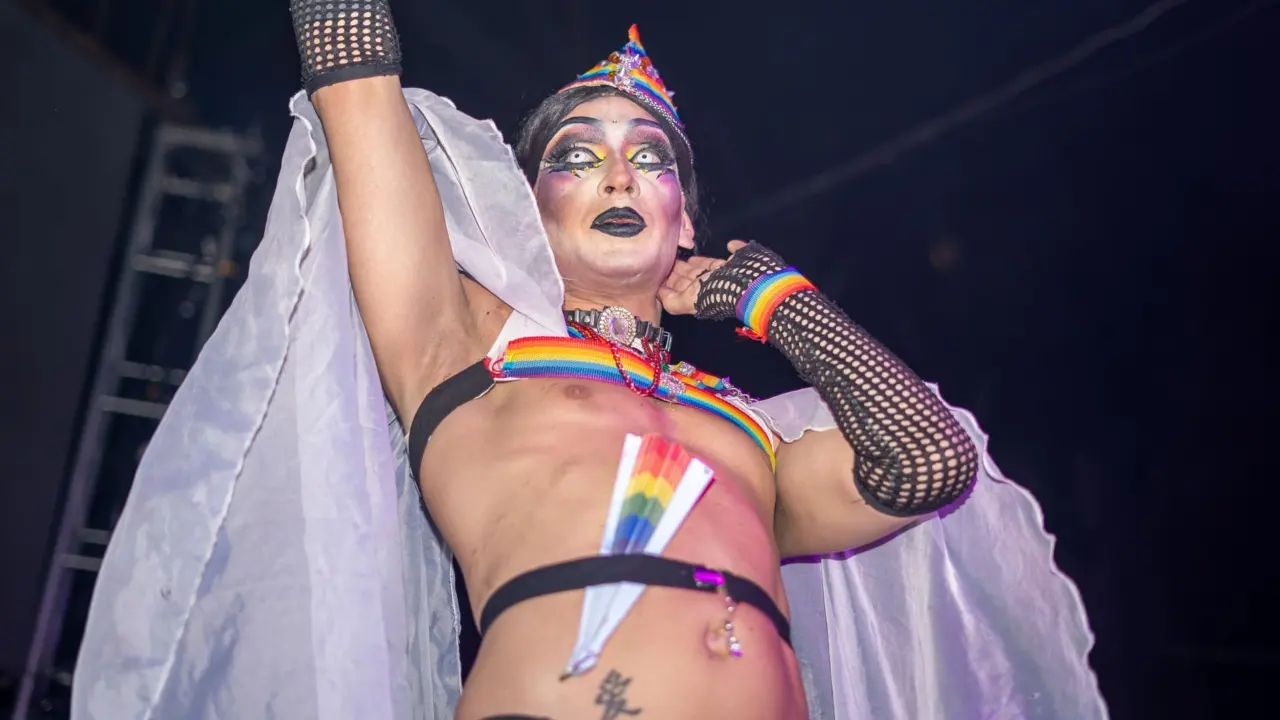
- Visual identity. The interview treats the music videos they produce and the clothes they wear during performances as seriously as the sound. In practice, a description of FAKA that mentions only recordings leaves out part of how the collective presents itself.
These points shape how to read the EPs. The sound is tied to a club music the pair encountered in Durban, and the project is framed as a statement about identity. Treat them as the artists’ stated aims and not as a critic’s reading of the records.
Biographical details to leave out
The interview gives no age, birthplace, full legal name or career history before FAKA. A profile should leave those out rather than fill them from guesswork or from other people with similar names.
The same applies to awards, chart positions and sales. None is stated, so none belongs here. If a later interview or an official artist page supplies them, add each with its source and date.
Frequently asked questions
What does the name FAKA mean?
According to the BRUZZ interview, “faka” means “occupy”, “penetrate” or “conquer” in Zulu.
Is Fela Gucci a solo artist?
The interview presents Fela Gucci’s work as part of FAKA, with Desire Marea. It does not document a separate solo catalogue.
Why does Durban come up in Fela Gucci’s story?
Fela Gucci says a visit to Desire Marea in Durban in 2012 was where gqom was first introduced to them, and that the music was popular at club nights there.
Has FAKA released a full album?
Current label and streaming listings are the place to check for a later release.